
Senior Housing
The class we operate ourselves, every day
What this class actually demands
Senior housing is the least forgiving class to operate and the easiest to under-resource. Residents are long-tenured, so a community's reputation is built over years and spent in weeks. Response time is not a service metric here — a failed water heater or a lift that will not run is a safety matter for someone who cannot easily work around it. And where the community is federally assisted, the compliance calendar is not administrative overhead sitting beside operations; it is the operation. Miss a recertification window and the subsidy that funds the building is in question.
Where HHP fits
This is a class we operate directly, with the property management, the trades and the accounting all in house. What we describe on this page is not a capability statement — it is how we run senior communities we are accountable for today.
The numbers that decide performance here
These are the figures we hold against the communities we operate, not a generic list.
Occupancy and waitlist depth
Occupancy on its own says nothing about resilience. Waitlist depth is what determines whether a move-out is a two-week gap or a two-month one.
Recertification timeliness
Annual and interim certifications tracked against their due dates rather than reconstructed at audit. The calendar is monitored continuously, not assembled ahead of a review.
Inspection readiness
Unit and site condition held to inspection standard year round, so a scheduled inspection is a confirmation rather than a scramble.
Work order response time
Hours from report to resolution. In a senior community this is a safety measure first and a satisfaction measure second, which is why the trades are ours.
Resident tenure
Long tenure is the point of this class. It is also the clearest signal that the building is being run well, and it moves slowly enough to be trusted.
Subsidy reconciliation
Assistance payments reconciled against the rent roll each period, so a discrepancy is found in the month it occurs.
Integrated services for senior housing
Six capabilities under one firm — the same structure we run our own communities on.
Property Management
On-site operation by HHP personnel who know the residents by name — which in a community with this tenure profile is an operating advantage, not a courtesy.
- Day-to-day community operations and on-site oversight
- Facilities management and preventive maintenance
- Vendor coordination and service quality oversight
- Financial management, budgeting, and reporting
- Resident relations and community standards enforcement
Advisory & Site Selection
Feasibility and diligence informed by operating three of these communities ourselves, including what the compliance load actually costs to carry.
- Market and demographic analysis
- Feasibility studies and operational due diligence
- Transition planning for new ownership or operators
- Long-term asset and operational strategy development
Transaction Advisory
We underwrite from the expense side because we operate this class, so the staffing and compliance assumptions in our model are ones we live with.
- Valuation and underwriting support
- Buyer and stakeholder coordination
- Transaction execution support
- Post-transaction operational and management transitions
Leasing & Occupancy Management
Occupancy managed through the waitlist rather than reacted to at notice, so the gap between one resident and the next stays short.
- Occupancy strategy development
- Move-in coordination and resident onboarding
- Coordination between leasing, care, and operations teams
- Retention-focused resident engagement support
Resident & Family Engagement
Communication that includes families, because in this class the person raising a concern is often not the person living in the unit.
- Resident communication and issue resolution
- Family engagement and reporting coordination
- Support for care-related operational workflows
- Alignment between management, staff, and families
Acquisitions & Development
Capital work and unit renovation run through our own general contracting, scheduled around residents who are at home during the working day.
- Acquisition underwriting and operational review
- Development and redevelopment advisory
- Operational setup for staffing, systems, and services
- Lease-up and stabilization planning
The HHP advantage for senior housing
We operate this class ourselves
Everything described here is drawn from senior communities we are accountable for, not from a capability deck — including the HUD Section 202 campus at Pryor, Oklahoma.
Self-performed trades, so response is immediate
Plumbing, electrical, HVAC, roofing and grounds are performed by our own personnel. For residents who cannot easily work around a failure, the difference between same-day and next-week is the whole service.
Compliance carried continuously
Certifications, recertifications and inspection readiness are monitored year round rather than reconstructed ahead of a review, so files stay audit-ready as a matter of course.
Cost visible at the line item
Work reports as labor hours, materials and time on site rather than a vendor invoice with margin already priced in. There is no subcontractor markup on self-performed work, and specialty vendors are engaged only where licensing requires it.
One firm accountable
Property management, the trades and the accounting report into the same principal. Owners review the same figures we do, as they land.
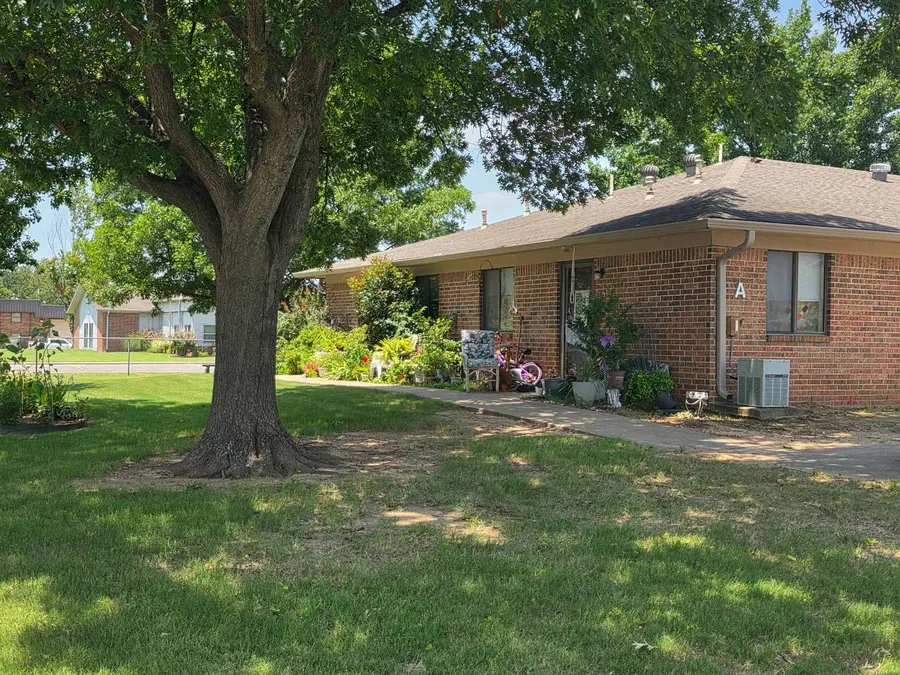
Mayor Wallis Manor and Venture Villas
One of the campuses we operate: three HUD Section 202 communities at 901 SE 9th Street in Pryor, Oklahoma. Single-storey one-bedroom homes with a community room, a resident library and shaded grounds, run with the property management, the trades and the accounting all in house.
Talk to us about a senior community
We operate this class every day. Send us the rent roll and the compliance calendar, and we will tell you what we would expect to find.